


Master joiner Andreas Kirschner from Dietersburg in Bavaria knew from a very early age that he wanted to work with wood. He owes this to his grandfather, who occasionally took him along to his workplace at the sawmill. That's why, at the age of just 15, Andreas decided to start an apprenticeship as a joiner at the Sagmeister joinery in Peterskirchen instead of continuing with his schooling. He worked there for another two years as a journeyman before heading to the master craftsman school in Passau.
After successfully completing his master craftsman's diploma, he immediately started as a team leader and trainer at the renowned interior fitting company Baierl & Demmelhuber in Töging, just a few kilometers from his parents' home. Next to his parents' house stood an old inn, which had been run on the side by his grandfather and was closed a few years ago. It had served as the village pub, a venue for weddings, birthdays, and carnival balls, and at times as a clubhouse for the nearby football club.
Even back then, Andreas was toying with the idea of starting his own business, so the old, currently unused building came at just the right time. In short: Andreas quickly decided that this was the place—this very building, well-known throughout the area—that would become his joinery.
However, to transform the inn into his own business, he had to do more than just make a few changes to the building. He quit his permanent job, started working on a 30-hour basis at the Zauner joinery in Kammern, converted the inn into his workshop on the side, and began his journey as a part-time self-employed entrepreneur.
From Zero to a Fully Equipped Workshop
To work in a customer-oriented way, however, you need machinery. And for a young company founder with a limited budget, that is a significant challenge.
Since Andreas had primarily worked with Felder machines at his previous employers and had been very satisfied with them, he decided to visit the Felder spring fair at the Geratskirchen location—only 30 km from his new joinery. For Andreas, it was clear: "I need standard machines; with them, I can cover the majority of my future orders."
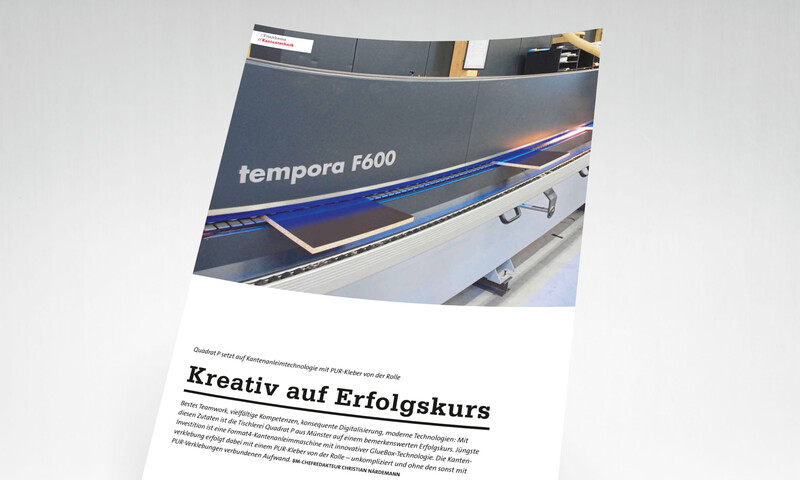
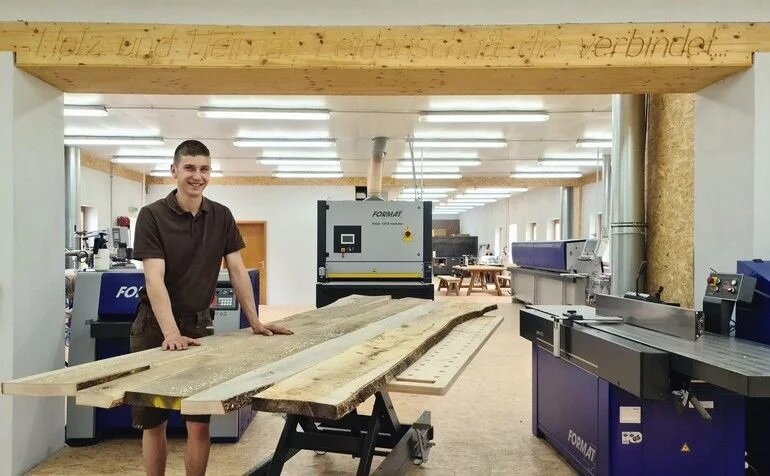
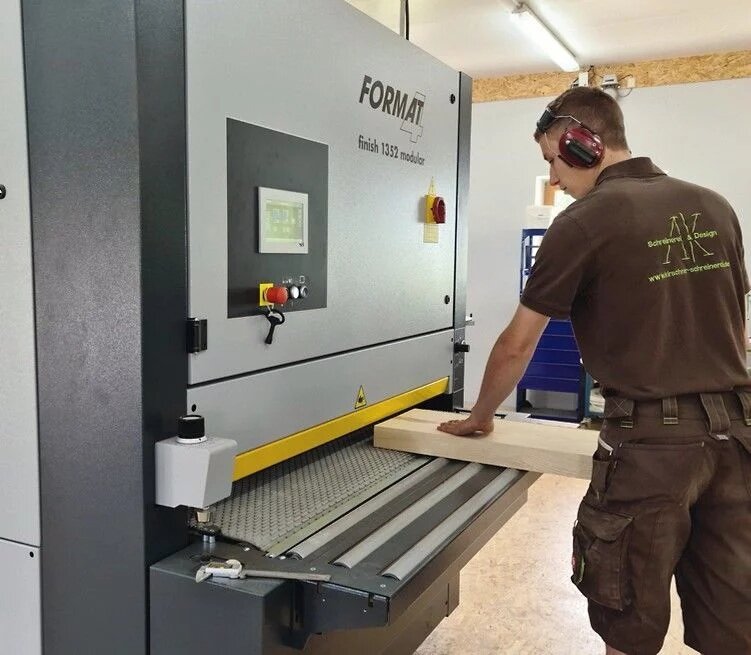
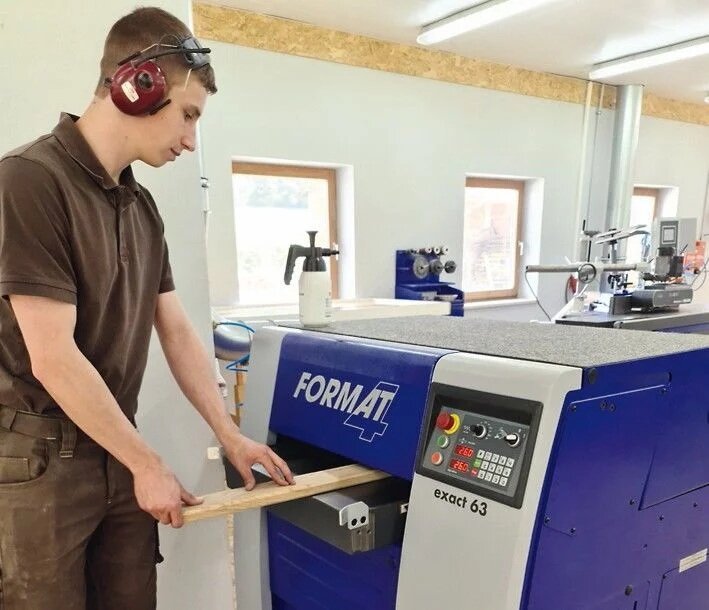
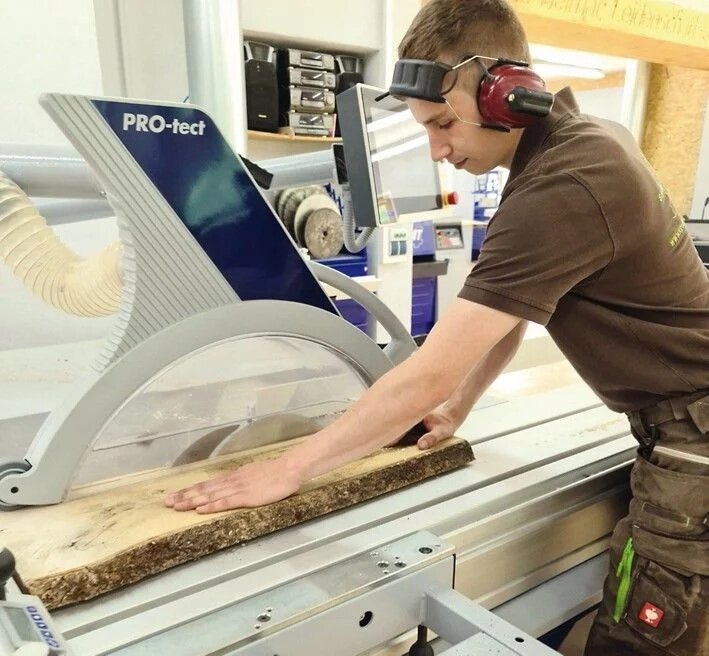
And then everything happened very quickly: at the fair, the young entrepreneur purchased four showroom machines, ready for immediate delivery. But before the Plan 51 L surface planer, the Exakt 63 thickness planer, the 54 M spindle moulder, and the Kappa 590 sliding table saw could move in, he still had to finish converting his workshop. This meant installing the entire ceiling and laying the floor—all while working his 30-hour-a-week job. Fourteen days and very little sleep later, the first machines arrived, and the foundation for his own joinery was laid. From that point on, Andreas could also take on large customer orders. And they came in such large numbers that he went into full-time self-employment on August 15, 2020. In January 2021, he decided to purchase more machines: a Finish 1352 Modular wide-belt sander and a Tempora 600 edgebander including the glueBox system. Since the Tempora could not be delivered until August, Felder provided him with a Perfect 710 as a loaner machine, free of charge.
From Reclaimed Wood Furniture to Epoxy Resin Tables
With his well-equipped range of standard machines, the master joiner now produces unique pieces such as kitchens and furniture for interior finishing, as well as terraces, furniture, and canopies for outdoor areas. His specialty is reclaimed wood. And here, too, his grandfather's old inn plays a major role. The conversion of the old building and the demolition of an associated barn yielded substantial quantities of reclaimed wood. Today, Andreas transforms this wood into one-of-a-kind pieces with great attention to detail. These usually become rustic-looking tables, benches, beds, wall claddings, and terrace canopies—but every now and then, he also creates a piece of epoxy resin furniture. For the latter, most inquiries come through his social media presence on Instagram (@ak_schreinerei). He taught himself the necessary epoxy know-how.
Word of his passion for reclaimed wood has now spread throughout the region. He is often contacted when an old barn or farmhouse is being demolished or a building is being renovated—so a steady supply is guaranteed.
Solid Wood Directly from the Sawmill
Andreas crafts the majority of his customer orders—about 75%—from solid wood. He only uses panel materials for cabinets and kitchens. Apart from the reclaimed wood, he only orders materials on a per-job basis, especially when it comes to solid wood. And he doesn't buy from a timber merchant, but from the nearby sawmill. He takes the freshly cut material to a friend of the family who operates a drying kiln using the waste heat from his biogas plant. "For me, this is the most sensible way to source and produce sustainably. Both I and my customers can trace the entire value chain," the young business owner tells me.
Organization Saves Time and Effort
To have all spare parts, cleaning agents, lubricants, cutters, knives, saw blades, and more ready and securely stored at each machine, Andreas relies on the Würth Red subscription program. "This way, I get a metal sorting rack from the Orsy shelving system for each machine. And I can have it designed in custom colors." Now, a container with accessories specific to each machine stands right beside it. "The subscription program also includes training courses and seminars worth about 2,000 euros (annually), free delivery, and free 24-hour delivery 10 times a year." The whole package costs the young entrepreneur 149 euros in the first year, and 199 euros in the following years.
Coworking Instead of Full In-house Capabilities
Even a one-man show like Andreas, who completes almost all orders on his own and exclusively with standard machines, knows that you can't always do it alone and that the technologies offered by CNC machines, for example, can often be advantageous. That is why he collaborates with two companies from the region: the installation company Bauelemente & Innenausbau Riepl and the CNC specialists at the Santner joinery.
The three not only help each other out when one needs the know-how of another or simply requires more manpower or machine power, but they also tackle large projects together. Tenders, for example, are very often handled jointly. The important thing is to come together right from the planning stage. Here, in addition to the cost calculation, individual tasks are distributed and potential schedules are drawn up. This well-coordinated team is a true community of joiners that has already successfully completed several major projects through coworking, such as the complete furnishing of several hotel rooms.